
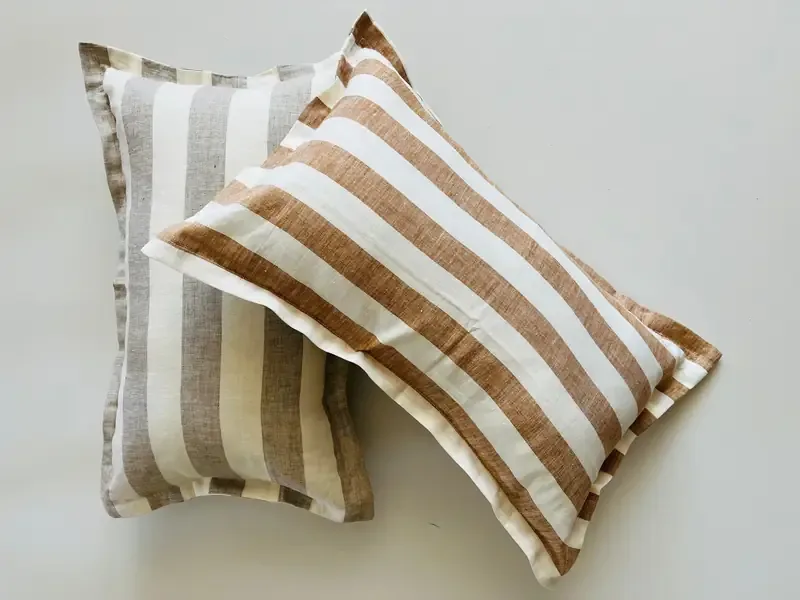
Most fabric is at its best on the day you buy it and declines politely from there. Linen is the exception. It starts crisp and ends up soft, and the softening is the point rather than wear.
What the words on the label mean
Linen is woven from flax. When a cloth is sold as French linen, it means flax grown in that part of Europe, where the damp climate suits the crop and the fibre comes out long and strong. Long fibres are what makes the cloth durable and what makes it soften instead of thinning.
Stonewashed means the fabric has been washed before it was ever cut, so most of the shrinkage and stiffness is behind it. That is why a stonewashed linen cushion feels broken in on day one.
The slubs are not faults
Run a hand across linen and you feel occasional thicker threads. Those are slubs, where the flax fibre varies in thickness, and they are the signature of real linen rather than a flaw in it. A cloth with none has usually been blended or treated to remove them. We leave them where they are.
How to wash it so it keeps improving
Cold or warm, gentle cycle. Linen does not need heat to come clean.
No fabric softener. It coats the fibre and stops it doing the thing you bought it for.
Line dry in shade. Sun fades the colour long before the cloth gives out.
Iron damp if you want it smooth, or do not iron at all. Creased linen is the look most people are actually after.
Each wash breaks the fibre in a little further. A linen cushion cover five years old is softer than the day it arrived, which is not true of a single other cloth in the shop.
What we have in linen
The lumbar covers come in natural, charcoal pinstripe and pink pinstripe, with a flange detail version in denim. In squares there is the sage stripe and a reversible ruffle. The marine blue tea towel is the cheapest way to find out whether you like the cloth before committing to a cushion.
Most of it sits in the Mama and Tochter range, and the rest is on the shop list.