
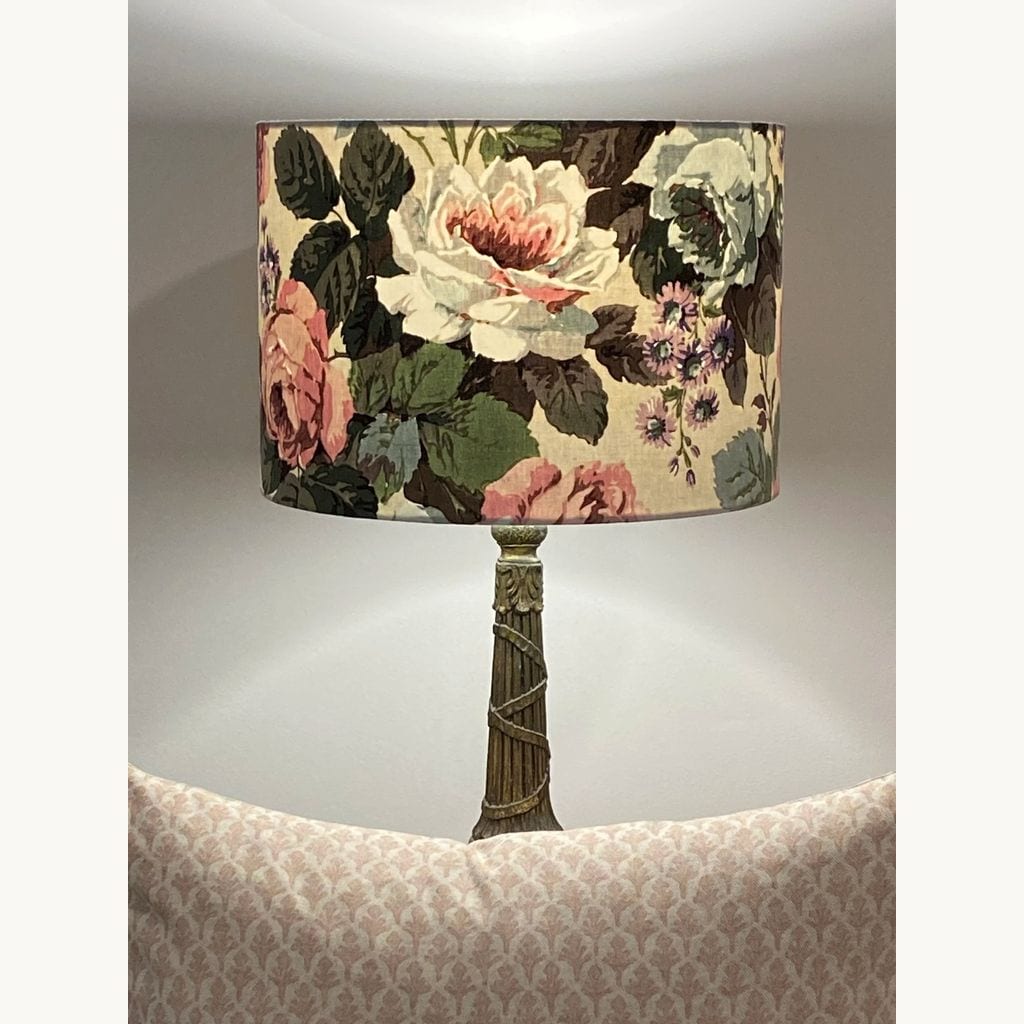
A lamp that looks wrong is almost always wearing the wrong shade. The base is usually fine. Here is how we size one in the shop, with a tape measure and no ceremony.
Sizing a shade to a base
Three rough rules that between them settle most lamps:
Width. The bottom of the shade should be about twice the width of the base at its widest point, and never narrower than the base.
Height. The shade should be roughly a third of the finished height of the lamp. Measured another way: if the shade is so tall it hides the neck of the base, it is too tall.
The hardware test. Sit the shade on and look from standing height. You should not see the fitting, the bulb or the top of the socket. If you do, the shade is too small, whatever the numbers say.
Our shades are mostly 25 cm and 30 cm across the base, which covers table lamps from a bedside pair up to a decent hall lamp.
Drum, empire or tapered
A drum has straight sides and throws light evenly up and down. It suits a straight or cylindrical base and reads as the plainer choice.
An empire narrows towards the top, pushes more light downward, and flatters a curved or turned base. On a bedside table it puts the light on your book instead of the ceiling.
A tapered shade sits between the two. If a lamp has any ornament to it, tapered is the safe answer.
What the fabric does to the light
This is the part people do not expect. A pale linen shade gives a warm, even light and lets the print show when the lamp is on. A dark or heavily printed cotton throws most of its light up and down and leaves the room dimmer but softer. Neither is better. A reading lamp wants the pale one. A lamp that exists to make a corner feel occupied in the evening wants the dark one.
Because our shades are hand rolled onto the frame, the print stays continuous around the shade rather than meeting in an obvious seam, which matters most on a large repeat like Golden Lilly or Acanthus.
When to re-cover rather than replace
If the frame is sound and only the fabric has gone yellow or brittle, the frame is worth keeping. Old frames were made of heavier wire than most new ones and they hold their shape. Bring it in, or send us a photo with the measurements across the top and bottom, and we can tell you quickly whether it is worth doing.
The same goes for fabric you already own. A metre of something you love is enough for a shade, and that is a custom order.
Where to look
The lampshade collection has what is finished and on the shelf, including Pimpernel, Bramble and Emery Walkers House. If you are in Canowindra, bringing the base in is faster than any of this: we will hold shades against it until one is obviously right.