
A Christmas table does not need much. Some low light, a few things that catch it, and cloth that feels good under the hand. Get those three right and the rest, the food, the noise, the long afternoon, tends to take care of itself.
Here is how we like to build it, layer by layer, with pieces that will still be on your table long after the last cracker has been pulled.
Start with the cloth
Linen is the quiet foundation of a good table. It softens the edges of everything placed on it, and it looks better for being a little creased. Do not fuss with ironing it flat. A relaxed fall of fabric suits a long, unhurried lunch, especially in an Australian summer when the doors are open and the day is warm.
If you would like to know more about why we love it, our piece on French linen is a good place to begin. Choose a tone that sits back rather than competes: oatmeal, flax, soft white. Let the candles and glass do the sparkling.
Bring in the candlelight
Candles change the mood of a room faster than anything else. The light is low and flattering, and it makes people linger. For Christmas, we like to gather them down the middle of the table rather than scattering them about.
A simple rule helps. Use three or five votives of different heights, set in a loose line along the centre. An odd number looks natural rather than arranged, and the varied heights give the eye somewhere to travel. Place a candle in each, or a flameless tea light if you have small children, a breezy verandah, or simply prefer not to think about it while you carve.
Glass that looks lived in
Our glass votives have a mercury silvered finish, which gives each one a softly worn look, as though it has been passed down through a family. No two are quite the same, so a group of them always looks collected rather than matched.
There are three sizes to play with. The Mozart starts at $10.50, the Bach is $12.50, and the Schubert is $22.50. Together they make a natural set of heights, small, middle and tall. You can see the Bach votive here.
When the candles are lit, the silvered surface turns the flame into a gentle, shifting glow. It is a warmer, more forgiving light than clear glass gives, and it works beautifully against linen.
Add a little iron
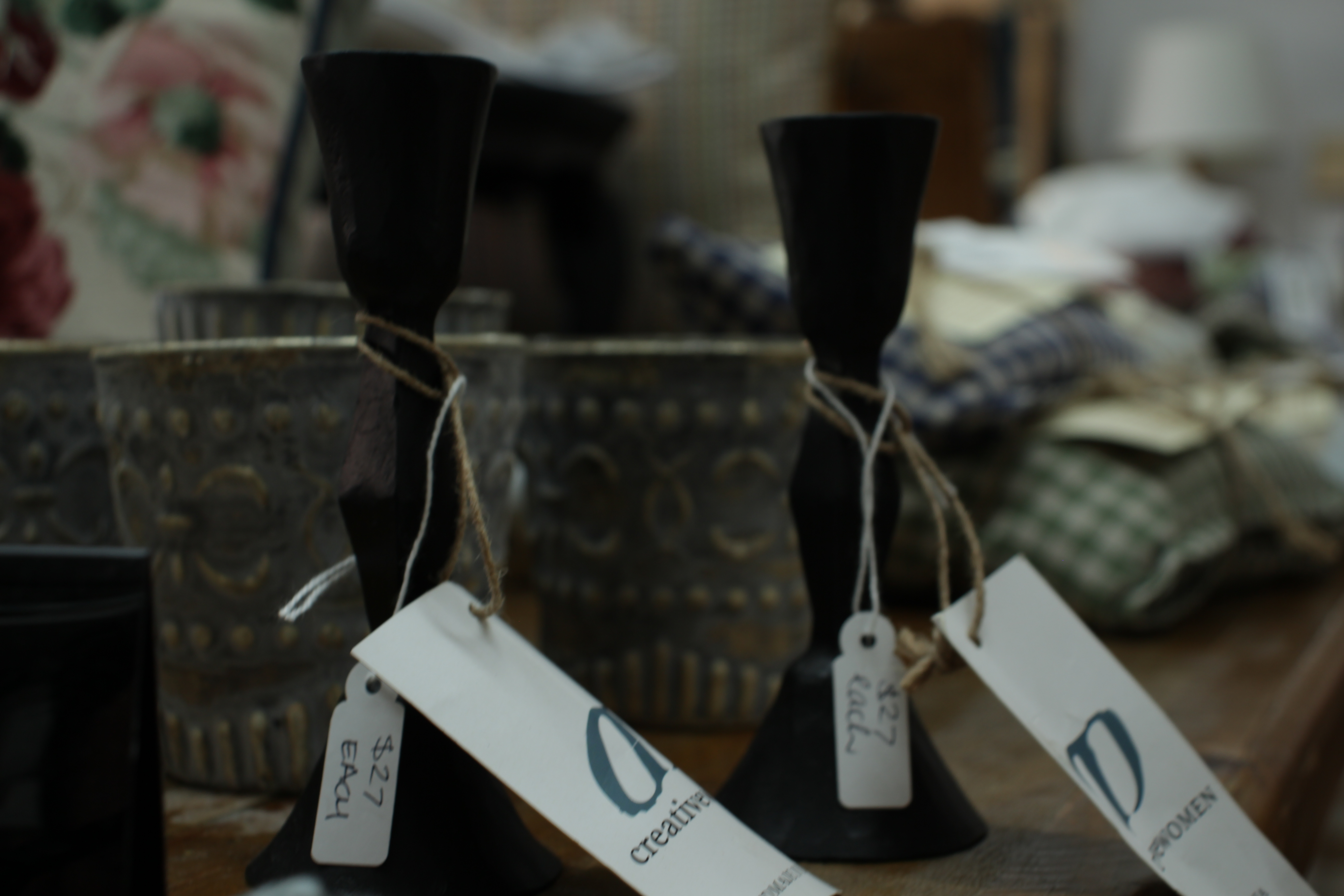
Glass is lovely, but a table benefits from something with weight. Our hand forged iron candle holders are $25 each and sold singly, so you can buy exactly as many as your table needs. Each is shaped by hand, with a dark, matte finish that grounds the more delicate pieces around it.
One or two among the votives is plenty. Set them at the ends of the table, or tucked beside a platter, and let them add a bit of contrast. You can find the hand forged iron candle holders here.
Pour into something handblown
The glasses matter as much as the candles. Our handblown hammered glass tumblers are made from recycled glass, and the hammered texture catches the candlelight in small, scattered points. They come as a set of two for $40.
They are sturdy enough for everyday use, which is rather the point. Fill them with water and lemon at the start of the meal, then with something cold and sparkling as the afternoon moves along. Because each one is blown by hand, there will be small differences between them, and those differences are what make them feel considered.
Putting it together
Lay the linen first, then the plates and cutlery. Run your votives down the centre, tall to short and back again, with an iron holder or two at the edges. Set a tumbler at each place if you have them, and add a sprig of something green, gum leaves, rosemary or olive, if you like.
Then step back and dim the overhead lights. That is nearly all there is to it. The table should look like it was gathered over time, not styled in an hour.
A small next step
If you would like to start with the candlelight, pick up three votives in different sizes and see how they sit together on your table. You can browse the full collection at finchandhatton.com.au.